
What is Isaac Newton's IQ?
Isaac Newton is usually assigned an IQ around 190. He died in 1727, roughly two centuries before the first IQ test. Every figure attached to him comes from retrospective estimation, which is a much weaker method than it sounds.
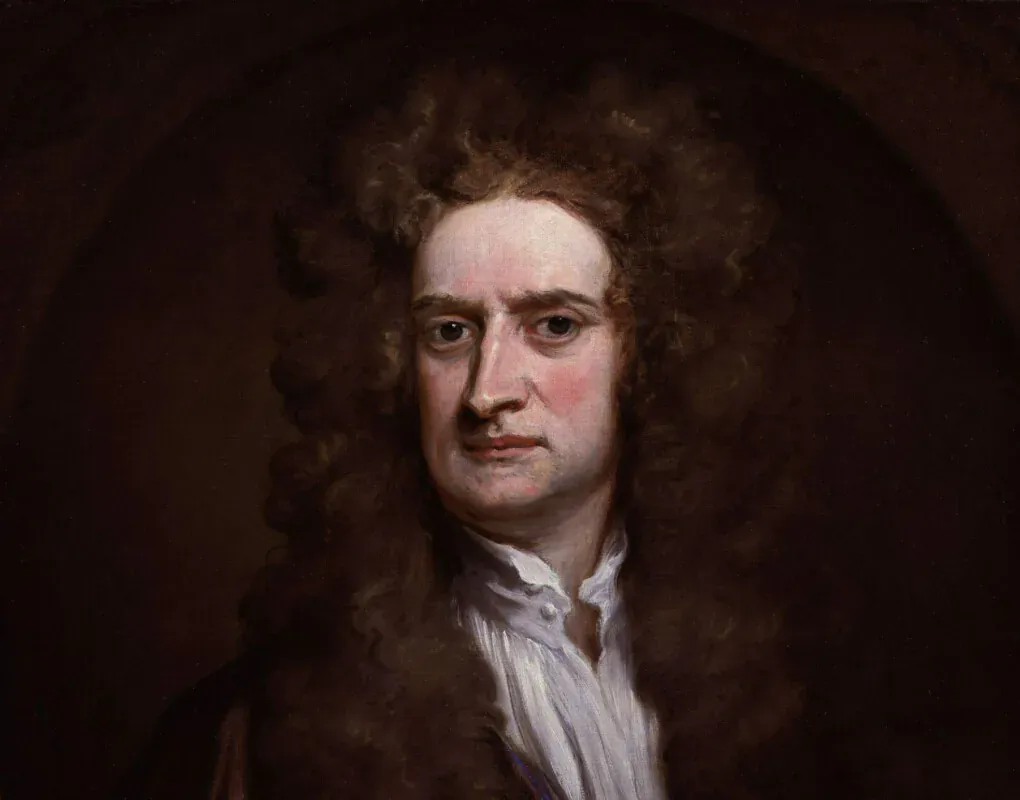
A quick, honest note. This number circulates online with no traceable origin. We publish it because you came to read it, and label it what it is: lore.
Where does the 190 number come from?
The technique behind these numbers is historiometry: rate a historical figure's documented childhood precocity and adult eminence, then convert the rating into an IQ-shaped number. Catharine Cox's 1926 study did this for several hundred historical figures and is the origin of most of the numbers you see attached to people who died before testing existed.
The method's problem is straightforward. Richer biographical records produce higher estimated scores, so the numbers partly measure how well documented someone's childhood was. Fame is an input, not an output.
Newton invented calculus, wrote the Principia, and also spent decades on alchemy and biblical chronology. No single number was ever going to summarise that.
How rare would a 190 IQ be?
If the 190 figure were literally true, it would be extraordinarily rare — rarer than1 in 1,009,976,791 people. That alone is a good reason to treat any confident-sounding celebrity IQ number with a raised eyebrow.
Too rare to draw — a grid with one highlighted dot in 1,009,976,791 would be a solid wall of gray.
What a score like this would mean
A 190 would sit in the very superior · gifted range — about one person in 1,009,976,791. Fill a large concert hall and you would expect nobody in the room to clear it.
Stop reading estimates about strangers. Sixteen questions and about ten minutes gets you a number that is actually yours.
Frequently asked questions
What was Isaac Newton's IQ?
Unknown and unknowable. He died two centuries before IQ tests existed; the quoted 190 comes from retrospective estimation.
What is historiometry?
A method that rates historical figures from biographical records and converts the rating into an IQ-like score. It is heavily influenced by how well documented a life was.